• Biblical Families is not a dating website. It is a forum to discuss issues relating to marriage and the Bible, and to offer guidance and support, not to find a wife. Click here for more information.

Trouble Confidently Explaining How Polygyny is Still Biblical in NT

All to Him

New Member
Female
Hello (and sorry if I'm posting this in the wrong section 😬).

In an unplanned, but made sense in the moment manner, I shared with my parents our discovery of what Biblical Marriage is and that it includes polygyny.
Silvio was on video call with me and listening to a conversation that we were all having and gave me the -go! Since then things have been interesting. 😅

Reactions were both expected and unexpected. I thought my dad would be more open-minded, but at this moment he is kind of looking into it (I gave them a book we've been reading), but with the intent of proving it is anti-Biblical. My mother's questions are more emotional/logistics/sharing etc oriented. Though she also questions if this is Biblical. She is concerned this will be harmful to me and our son.

We understand that being presented with this information can be very jarring and hard to process after years and years of deeply ingrained beliefs to the contrary.

While we believe that Plural Marriage is Biblical, we are still in the process of having command of the information. In other words, we can't defend on the spot every argument and verse thrown at us against polygyny, from memory. Especially myself, I am fully convicted of this Biblical truth, but can't relay that understanding coherently, if that makes sense.

Right now though, I would say their biggest hangups are where is polygyny in the New Testament. That the Law is no more. That it isn't commanded. Fine, it was in the Old Testament, but done away with in the New Testament. Two verses that were brought up to me were Hebrews 8:13 and Hebrews 9:15-17.

I'm unsure if it would be helpful to know that we are Christians that attend church of Christ congregations. I provide this information in case it helps to know where we are coming from doctrine-wise.

All this to ask: can someone point me to any resource, whether it be posts on this forum (which I have a few tabs open of posts to read on here, that seemed relevant to this) or elsewhere that can help us clearly explain the idea that there was continuity from OT to NT, not that one completely stopped applying? We know there are Torah Observers, and that is not us, though we like hearing from anyone as we must always be open to learning and correcting if needed. We are coming from the position that God fulfilled the "ceremonial" and "judicial" parts of the law, not the unchanging moral law.

In essence the question is: How would you bridge the "gap" from OT to NT with regards to the Law and polygyny for a New Testament, believing Christian?
 
Like you, I tend to believe that the moral law given in the Old Testament still generally applies. It is from God Himself after all. Marriage and sexuality are governed by the moral law.

I'm a Reformed leaning Southern Baptist FWIW. I do not hold to the Torah Observant view.

Adultery was wrong in the OT, and it is wrong now. Homosexuality was wrong then and it is wrong now. Incest was wrong then, and it is wrong now.

Monogamous marriage was legitimate then, and it is legitimate now. Polygyny was also legitimate then, and it is still legitimate now.

Marriage was instituted by God. It is a good thing. God Himself clearly and consistently treats polygyny as legitimate marriage, not sexual immorality or adultery.

The burden of proof is not on us. It is on those who would assert that polygyny is now prohibited under the New Covenant. They have to clearly prove it from the NT text, and they can't.

The Old Testament very clearly allows it. The New Testament does not prohibit it.

The New Testament is consistent with the Old Testament on everything else regarding the basics of marriage and sexuality.

There are multiple places in the teachings of Paul (Romans 7, and 1st Corinthians), that strongly infer that polygyny is still legitimate.
 
Those passages from Hebrews have nothing to do with marriage, polygyny , sexuality, or the moral law.

The fact that Christ has accomplished redemption, and that we are now under the New and better Covenant does not change the moral fabric of the universe.

We are accepted and blessed by God based on the Saving Work of the Lord Jesus Christ, but the fundamental moral law of God's universe continues to exist.

We still aren't supposed to steal our neighbor's property, or covet the things he has. We still aren't supposed to bear false witness against our neighbor. We are still required to honor our father and mother. Idolatry is still wrong. Homosexuality and adultery are still wrong.

Marriage still exists, and is still a good thing. Polygynous marriage is still a legitimate form of marriage.

Look at Romans 7:1-5

The married woman is still (now in New Covenant) bound by law to her husband and is an adultress if she is joined to another man while her husband lives. That is exactly what the Old Testament Law says.

On the other hand, Paul never taught that the man is an adulterer if he is joined to a second woman while his wife lives. That's because the Law permits polygamy. Paul is consistent with the Law.

We see the same thing in 1st Corinthians 7:10-11.

The woman is told not to leave her husband, but that if she does leave, she cannot marry another man (since that would be adultery).

The man is instructed to not send his wife away, but is not prohibited from a second marriage (since that would be lawful polygamy not adultery).

Paul teaches the same thing once again in 1st Corinthians. 7:39 where he says that the wife is bound (now today in the New Covenant) to her husband as long as he lives, and that she is free to remarry if he dies.

That's all consistent with the the OT Moral Law.
 
Hi @All to Him, congratulations for taking a stand for the authority of Holy Scripture. 👍 @Bartato has presented many valuable answers and biblical truths to point out to the people you are talking with. Something I find most helpful to keep in mind is the fact that marriage was created and is defined by Almighty God. If people say He has changed His definition of marriage, the responsibility for proof is theirs, which is impossible for them to do. A simple question to ask a person is for them to show you the penalty for a man taking more than one wife. Ask them to show you chapter and verse for what God says the penalty is. They can't because it's not wrong. Then ask them to read 1 Corinthians 6:9-10 where we are told fornicators, adulterers, etc. will not inherit the kingdom of God. Ask them what category of sin they believe polygyny is since it cannot be fornication or adultery because many of the heroes of the faith lived practising polygyny. Jesus Himself said Abraham and Jacob would sit be in the kingdom, and those men are well known polygynists. Either Jesus was lying or those who say polygyny is a sin are lying, and it cannot be the first option! Please keep us posted on how things progress. Cheers
 
That's all consistent with the the OT Moral Law.

Thank you very much for your thoughts; reading through it the way you laid it out was helpful in structuring ours a bit better!

A simple question to ask a person is for them to show you the penalty for a man taking more than one wife.

Also thank you! This repeated notion that the responsibility for proof is theirs makes so much sense.
I've explained to them this doesn't mean you need to partake of this, you just need to come to the understanding that it is a Biblical form of marriage. To them, we are seeking a "lifestyle." To which I've stated this isn't a "lifestyle," men are called to either celibacy, monogamy, or polygyny. And what each man's calling is, is between him and God.


It is a little frustrating that we've been studying this topic for months and they expect to have and find all the answers overnight.
Their Biblical knowledge is extensive, but my hubby pointed out that if we ever get to the point we think we know it all and can't learn something new, especially Biblically speaking, we have a problem. Plus once you go deep in a particular area or subject, you inevitably uncover more and more ways to prove it's wrong or right.

Anyway, this is surely getting us to dig deeper into the Word and have a fuller understanding of so many things that we didn't even realize we were surface level!
 
All this to ask: can someone point me to any resource, whether it be posts on this forum
There is a book here in the resources "Marriage from the Bible Alone" that is very good. I also appreciate how @frederick approaches it. What is the penalty? What class of sin is it? Those unanswerable questions coupled with "Many will come from the East and West and sit down with Abraham Issac and Jacob in the kingdom leaves you realizing the "penalty" .....at least here at our house.....is just more family and blessings including cute little people.

Since you asked about the New Testament. The council at Trent did what 1 Tim prophesied and put TEETH in the form of disfellowship to their FORBIDDING TO MARRY.

When you look at Greek concordant scriptures you see that Jesus told two parables that included polygyny. The King who arranged marriages for His son and the ten virgins. The translators changed the text to hide this because Rome had already "Thought to change times (sabath) and laws (polygyny outlawed)"
The reason you don't see polygyny discussed much in the New Testament is it was common and accepted as lawful at the time.

it is a lot of social conditioning to sort out. Prayers for you all as your parents work though this.
 
Hello (and sorry if I'm posting this in the wrong section 😬).

In an unplanned, but made sense in the moment manner, I shared with my parents our discovery of what Biblical Marriage is and that it includes polygyny.
Silvio was on video call with me and listening to a conversation that we were all having and gave me the -go! Since then things have been interesting. 😅

Reactions were both expected and unexpected. I thought my dad would be more open-minded, but at this moment he is kind of looking into it (I gave them a book we've been reading), but with the intent of proving it is anti-Biblical. My mother's questions are more emotional/logistics/sharing etc oriented. Though she also questions if this is Biblical. She is concerned this will be harmful to me and our son.

We understand that being presented with this information can be very jarring and hard to process after years and years of deeply ingrained beliefs to the contrary.

While we believe that Plural Marriage is Biblical, we are still in the process of having command of the information. In other words, we can't defend on the spot every argument and verse thrown at us against polygyny, from memory. Especially myself, I am fully convicted of this Biblical truth, but can't relay that understanding coherently, if that makes sense.

Right now though, I would say their biggest hangups are where is polygyny in the New Testament. That the Law is no more. That it isn't commanded. Fine, it was in the Old Testament, but done away with in the New Testament. Two verses that were brought up to me were Hebrews 8:13 and Hebrews 9:15-17.

I'm unsure if it would be helpful to know that we are Christians that attend church of Christ congregations. I provide this information in case it helps to know where we are coming from doctrine-wise.

All this to ask: can someone point me to any resource, whether it be posts on this forum (which I have a few tabs open of posts to read on here, that seemed relevant to this) or elsewhere that can help us clearly explain the idea that there was continuity from OT to NT, not that one completely stopped applying? We know there are Torah Observers, and that is not us, though we like hearing from anyone as we must always be open to learning and correcting if needed. We are coming from the position that God fulfilled the "ceremonial" and "judicial" parts of the law, not the unchanging moral law.

In essence the question is: How would you bridge the "gap" from OT to NT with regards to the Law and polygyny for a New Testament, believing Christian?
I think the challenge any christian might ask is how you define one law in the Torah as moral and another as "immoral"? "AMoral"? Whatever the opposite of moral is in your mind. In order to know if the OT biblical definition of marriage is moral or not, there needs to be a concrete way to define what laws of God are moral to you. Personally, I would love to understand how that would be defined as well.
 
Because Lord doesn't change, therefore same moral code from Old Testament still applies.

Also, New Testament in practice defends polygyny. Allegory with 10 virgins waiting wedding only same logical sense with polygyny.

Qualifications for elders include being married. Author uses word mia which can be both translated as one and first. This is in 1 Timothy 3:1-7 and Titus 1:6-9

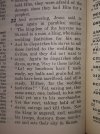
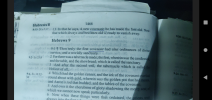
Also 1 Corithians 7:2 where every man should have own wife and woman own husband Paul confirms polygyny again in original Greek. He uses different words where word own in wife's case implies exclusivity (for husband is exclusive for wife), while word own in man's case doesn't imply exclusivity (so husband isn't limited to one wife).

Yes, Greek is specific. It has one word where you can only own one instance of some object and another word in case you can own multiple instances of some object.
 
View attachment 12180View attachment 12181
The translators turned marriages into wedding festivities.
As @Joleneakamama said, the parable of the weddings feasts in Matthew and the parable of the wise and foolish virgins do come directly from the mouth of Christ, and both involve polygamy.

The Greek text does not say "wedding feast" in the singular. It is plural. It says "weddings feasts", or something of that sort.

In the other parable, the wise and foolish virgins were potential brides of one Man, not bridesmaids. Modern readers read their preconceived notions of monogamy into the text and change these women into bridesmaids, but they are actually brides.

When the five foolish ones show up later, they call Him Lord indicating that they belong to Him (wives belong to husbands, but bridesmaids do not). He in turn said "I don't know you" indicating that they do not belong to Him.

There will be no bridesmaids at the wedding feast of the Lamb. All of the Redeemed are participants, not onlookers.

The extreme polygamy of Solomon (which caused his fall), the imperfect son of David, points to the ultimate "polygamy" of the Greater Perfect Son of David, the Lord Jesus Christ.

While Solomon's 1000 wives turned his heart away from the Lord, the Greater Son of David will turn the hearts of all the billions of the Redeemed back to the Lord.
 
You can use following website to learn better justification:


Tom Shirpley's Man and Woman im Biblical Law is great book.
 
Hi @All to Him

I too am a member of the church of Christ so I understand some of the specific challenges of speaking with those in our tradition.

The corner stone of the churches of Christ is trying to restore first century Christianity through the authority of the Bible alone. So establishing that polygyny was taking place in the first century is important. By law, Rome allowed a man to only be married to one woman at a time, but we know that Herod the Great, the Herod who tried to kill Jesus as a baby, had 10 wives. There seemed to be some leeway for polygyny in Judaea. So first century christians likely would have been familiar with polygyny in their time period. Non-christian jews didn't reject polygyny until the 11th century.

The church of Christ tends to be Antinomian (Against the Law). So one of the first things you need to do is establish how the Old Law relates to the New. I was taught that if something from the OId Law was not repeated in the New Law, it no longer applied (Example: Keeping the Sabbath day). I don't believe that anymore, but I can work with it. @Bartato had some great points, but a lot of his examples of things from the Old Law that are still sin are repeated in the New Testament, and so they hold no persuasive power in this conversation. Ask your family member to show that incest is wrong using the New Testament only. It can't be done. The New Testament has very few specifics as to what "sexual immorality" entails. You have to go to the Old Law to get the specifics of what is included in sexual immorality. So either they have to conclude that incest is not sexually immoral or admit that the Old Law defines sexual immorality for us under the New Law. Under the Old Law, polygyny was not sexual immorality or adultery, so without a new command in the NT, it is not sexual immorality under the New Law.

The second argument is what @Bartato covered regarding Romans 7:1-5, 1st Corinthians 7:10-1, and 1st Corinthians. 7:39. Churches of Christ tend to be complimentarian in their understanding of gender roles, but when it comes to Marriage, Divorce, and Remarriage theology, they quickly become egalitarian and apply all commands equally to each gender regardless of the text. If you hold them to "Speak where the Bible speaks. Silent where the Bible is silent." They have to acknowledge the conclusions about those passages that @Bartato laid out.

Speaking of Divorce passages, many will expand Jesus' teaching about divorce to include a teaching on polygyny. Again, "Speak where the Bible speaks. Silent where the Bible is silent." is an effective standard to hold them to at that point. This is also a good opportunity to explain that polygyny isn't one marriage between a man and many women. It is one man in multiple marriages to multiple women. So marriage is one man joined to one woman as Jesus describes. Polygyny is just one man in multiple marriages.

No disrespect to those who bring up the parables, but I don't think they are compelling arguments. Getting into the weeds about ancient jewish tradition and claiming translators are covering up the truth will not appeal to most people. I believe polygyny is permitted as much as the next person, but I'm not even fully convinced those passages should be translated the way some claim they should be. (Not looking to derail this thread with arguing about these passages)

For what it's worth, the BereanPatriot article is what convinced me initially. https://www.bereanpatriot.com/is-polygamy-polygyny-biblical-does-god-allow-it/
 
Here is another NT passage for consideration.

But I want you to know that the head of every man is Christ, the head of woman is man, and the head of Christ is God. (1st Corinthians 11:3 NKJV))

The relationship between Christ and the Christian is one of Head or Leader and follower or followers. Christ is the Head of more than one man.

The relationship of man and woman is like the others listed. It can be singular, like that between the Father and the Son, or it can be plural like that between Christ and every man.

That is the nature of leadership and covenant.

The covenant head can only be one, but the followers can be one or more than one.

We have One God, but He has many followers.

A father can have one child or multiple children, but the child has only one father.

A master may have one servant, or many servants, but a servant can only have one master.

A king has many subjects, but a subject only has one king.

Marriage is a hierarchical covenant. It has a leader/protector/provider, the husband, and a follower/helper/beloved, the wife.

There is one leader in a marriage, the husband. The leader can lead protect and provide for one or more than one woman.
 
Thanks for sharing from the Church of Christ perspective @FatherRuleMemes. That was helpful. 👍🏻

The "Duck Dynasty" Robertson guys are Church of Christ aren't they? I've listened to some of their podcasts dealing with religious matters, and generally enjoy them.
 
Here are some additional thoughts on Romans 7, specifically verse 4.

Therefore, my brethren, you also have become dead to the law through the body of Christ, that you may be married to another—to Him who was raised from the dead, that we should bear fruit to God. (NKJV)

Here we see that multiple individual Christian people (my brethren) are each individually personally united to One Lord Jesus Christ who was raised from the dead.

The word "married" is even used to describe the relationship between Christ and His followers.

If Christ Himself is "married to" multiple individual believers, how can anyone suggest that polygyny is now unlawful under the New Covenant?
 
Thanks for sharing from the Church of Christ perspective @FatherRuleMemes. That was helpful. 👍🏻

The "Duck Dynasty" Robertson guys are Church of Christ aren't they? I've listened to some of their podcasts dealing with religious matters, and generally enjoy them.
They were when they started out. I believe their congregation left the church of Christ tradition since the show started. I know Sadie considers herself a preacher, which is pretty universally unaccepted in the churches of Christ. Although feminism is creeping in everywhere.
 
I know Sadie considers herself a preacher, which is pretty universally unaccepted in the churches of Christ. Although feminism is creeping in everywhere.
That reminds me of part 2 of Bendell Werry's law.


1.) An evangelical man will only speak out on a controversial cultural issue if he can do so by citing a woman who already has.

2) Every conservative woman with a public platform is on a trajectory toward liberalism.

Too much money and fame isn't good for people, probably especially young women. Sadie isn't the same as her grandpa Phil.
 
@All to Him
You have some good meat to chew on and I won’t add too much more.

I will say that your biggest hurdle won’t be showing specific verses or arguing from a NT perspective. Your biggest hurdle will be the antinomian mindset that @FatherRuleMemes described as being part of your CoC tradition. That’ll be the sticking point.

If someone sees a division between the Old and New and feels one was declared obsolete, then it’ll take work to unravel that. Even the Moral vs Ceremonial vs Civil is hard to define. It’s really a false categorization.

God never gave his Law for salvation. It was always a way to show our love towards him in obedience and righteousness. Holiness is separation/consecration. God’s people were to show how special and different they were from the nations by following his Laws. Salvation has always been by grace through faith.

Taking down that wall of confusion will be hard but with time and patience it’s possible.
 
Fine, it was in the Old Testament, but done away with in the New Testament. Two verses that were brought up to me were Hebrews 8:13 and Hebrews 9:15-17.

In Hebrews 8:7 and 8:13 the word "covenant" was artificially and I would argue maliciously added to the text. This is a topic not many people understand, but if we look at the previous chapters of Hebrews we can obviously see that the topic is either "the priesthood" or "the High Priesthood."

If we read these passages in a KJV which has italics, it clearly shows us that these words did not appear in the original text. Often we will see one or two words added to streamline a sentence, such as "then" or "In the." This is just a translator bridging the gap to English from Greek.

Read Hebrews 8:8 - "For finding fault with them..."

"Them" who?

Artificially inserting "covenant" here changes the entire message of scripture. Whole new doctrines and whole religions were built on this one small "tweak." And yet, it is plain to see that this word was not here.

"For if that first priesthood had been faultless, then should no place have been sought for the second."

"In that he says, a new priesthood, he has made the first old. Now that which decays and becomes old is ready to pass away."

Also note that 8:13 - even if you adhere to the inserted "covenant" - clearly states that "it" still exists. The old becomes ready to pass away, but it hasn't. Paul says it still is here.

Since most of Hebrews 8 is reciting Jeremiah 31, we can look at that source. In Jeremiah 31 it speaks of a new covenant which will be made with Judah and Israel, which are called in scripture the two wives of Yahweh. (Stick around on this site very long and you will see references to Yahweh the Father being the husband of multiple wives).

Hebrew 9 also does this same thing but using "testament." Here though I would argue that the doctrinal argument stakes are a little lower.

"Then also the first priesthood had also ordinances of divine service, and a worldly sanctuary."

--------

This is a tangential topic but in Hebrews 10 we once again reference Jeremiah 31.

So let's look at Jeremiah 31 again.

----------

31Behold, the days come, saith Yahweh, that I will make a new covenant with the house of Israel, and with the house of Judah:

32 Not according to the covenant that I made with their fathers in the day that I took them by the hand to bring them out of the land of Egypt; which my covenant they brake, although I was an husband unto them, saith Yahweh:

33 But this shall be the covenant that I will make with the house of Israel; After those days, saith Yahweh, I will put my law in their inward parts, and write it in their hearts; and will be their God, and they shall be my people.

34 And they shall teach no more every man his neighbour, and every man his brother, saying, Know Yahweh: for they shall all know me, from the least of them unto the greatest of them, saith Yahweh: for I will forgive their iniquity, and I will remember their sin no more.

----------

"I will put my law in their inward parts, and write it in their hearts"

Has this happened? I don't believe so. We have many arguments so this can't have occurred yet.

"And they shall teach no more every man his neighbour"

We are still teaching each other. And arguing.

"for they shall all know me, from the least of them unto the greatest of them"

This certainly has not come to pass yet.
 

Attachments

  • Screenshot_20260523-024339_Gallery.png
    Screenshot_20260523-024339_Gallery.png
    2.1 MB · Views: 6
  • IMG_20260523_024245.jpg
    IMG_20260523_024245.jpg
    514.3 KB · Views: 6
Back
Top